When industrial operators evaluate solar energy, they often start with one question: "How many panels do we need?" That question assumes solar photovoltaic. For many industrial applications, it's the wrong starting point. Solar thermal — a different technology with different physics — is sometimes the better fit, and the wrong choice between the two can lock an operation into twenty years of inefficient energy use.
This article explains the difference, when each technology fits, and the questions an industrial operator should ask before specifying either.
What each technology actually does
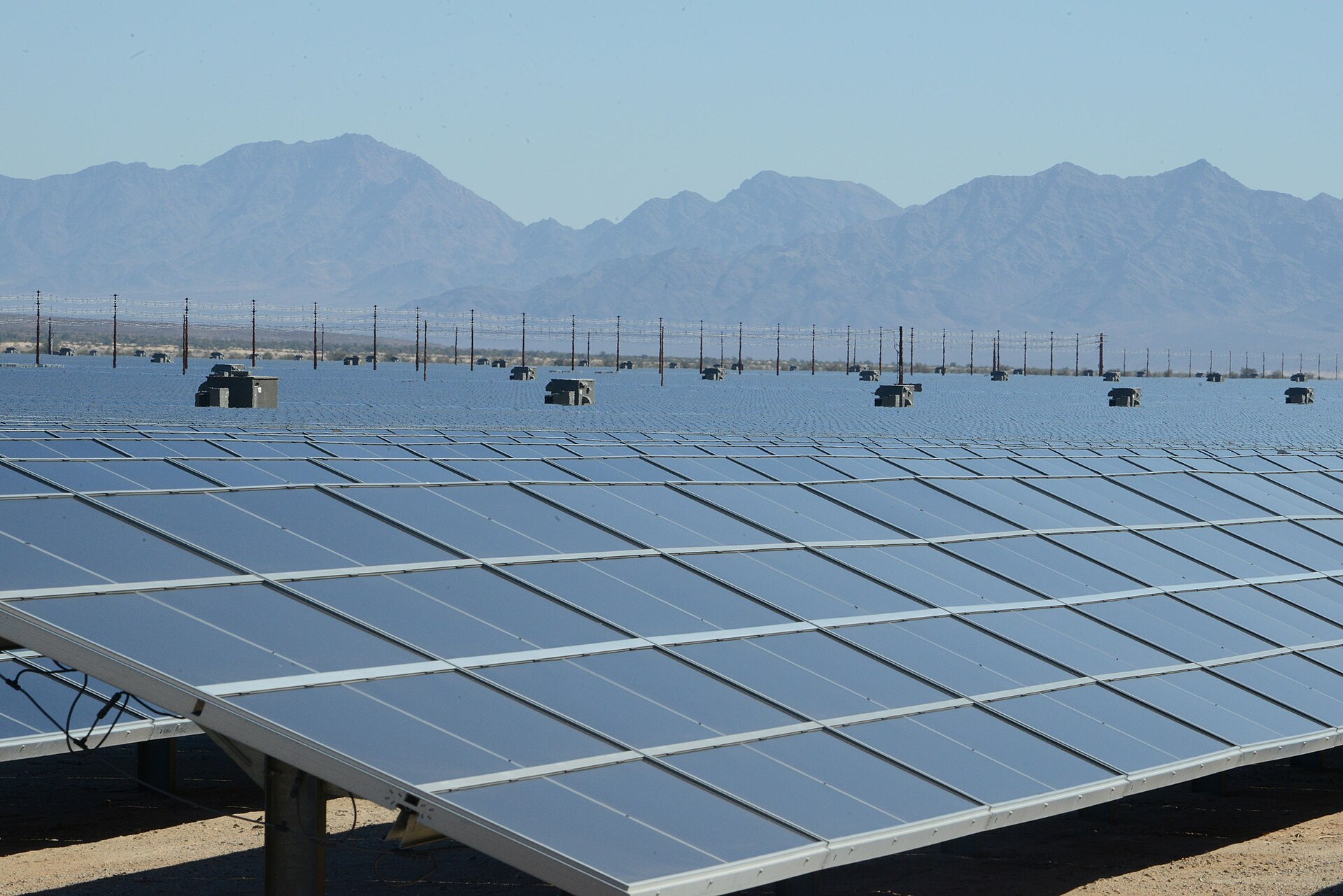
Solar photovoltaic (PV) converts sunlight directly into electricity through semiconductor cells. The output is DC current, usually inverted to AC for use. Solar PV is best for any application where electricity is the end product or where electrical heating is acceptable.
Solar thermal captures heat directly from sunlight using collectors, concentrators, or mirrors. The output is hot water, steam, or hot air at temperatures ranging from 60°C up to several hundred degrees depending on the system. Solar thermal is best for any application where heat is the end product.
The distinction sounds obvious. In practice, industrial operators routinely specify solar PV for applications that would be far more efficient on solar thermal — primarily because solar PV is more familiar.
Why the choice matters
Converting sunlight to electricity, then converting electricity back to heat, is thermodynamically inefficient. A solar PV system feeding an electric water heater might deliver 15-20% of the sun's energy as useful heat at the tank. A solar thermal system delivering the same hot water might deliver 50-65%.
For an industrial operation that needs process heat — hot water for cleaning, steam for sterilisation, hot air for drying — solar thermal is two to three times more energy-efficient per square metre of collector area. Over a twenty-year operating life, that compounds into a fundamentally different cost structure.
For applications where electricity is the end product — lighting, motors, electronics, electric vehicle charging — solar PV is the correct choice, and the conversation about thermal is irrelevant.
When solar thermal is the right answer
Solar thermal is typically the better economic and environmental choice when:
- The end application is heat at a defined temperature
- The required temperature is below 300°C (which covers most industrial process heat)
- The site has consistent direct sunlight
- The heat demand is predictable and continuous, ideally daytime-aligned with solar generation
Industries where solar thermal frequently outperforms solar PV for process heat include food and beverage processing, dairy, textiles, pharmaceutical manufacturing, district heating, swimming pool heating at scale, and any operation with significant hot water demand.
When solar PV is the right answer
Solar PV is the right choice when:
- The end application is electricity
- Heat is needed at very high temperatures (above 400°C, where parabolic concentrators become specialised)
- The site has variable demand that benefits from battery storage
- Grid export is a possibility
- The total energy mix is dominated by electrical loads
Solar PV is more flexible — you can store it, export it, use it for any electrical purpose. For most office buildings, retail premises, and operations dominated by electrical demand, PV is the right answer.
Parabolic concentrators: where solar thermal goes to scale
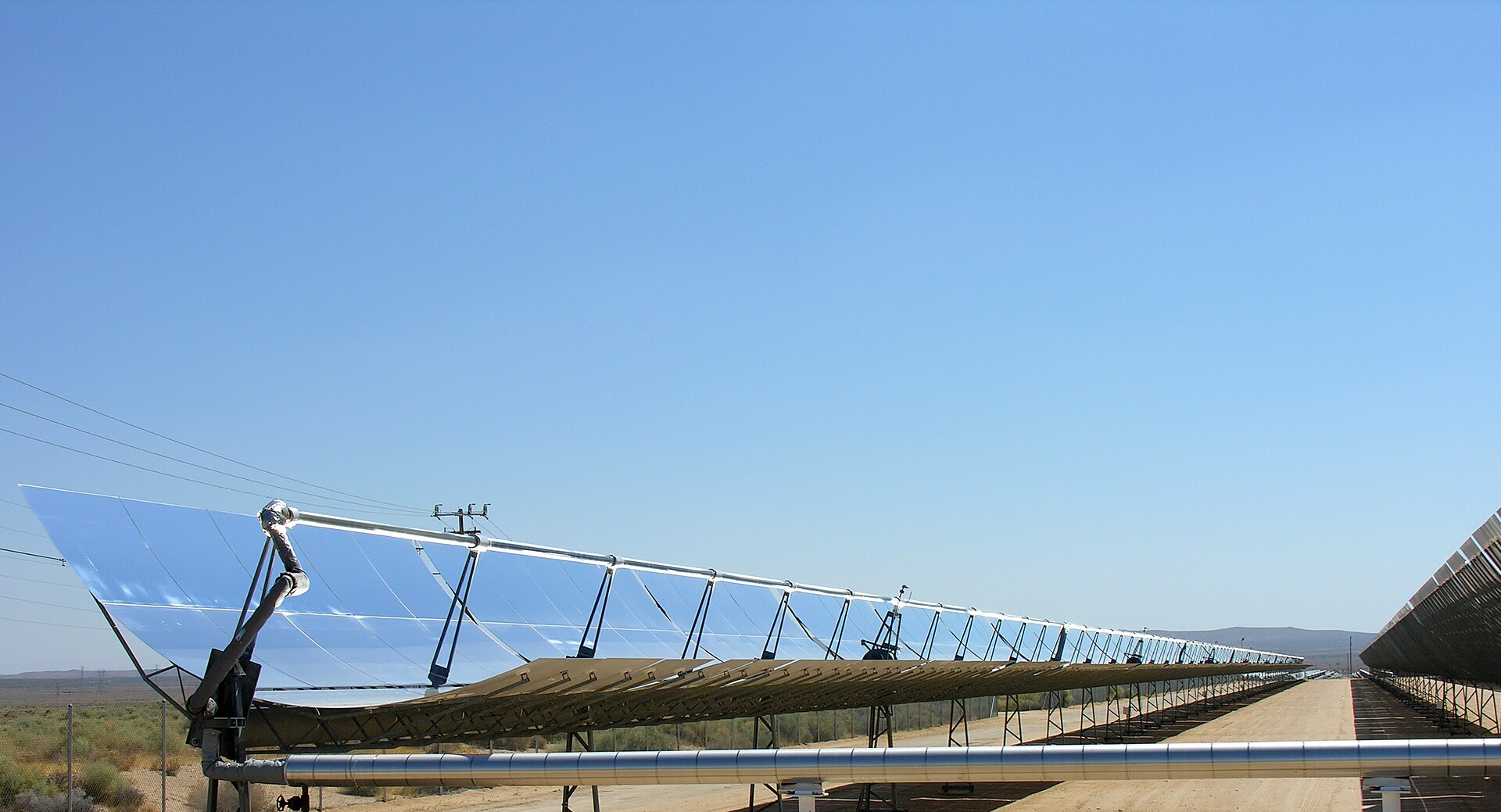
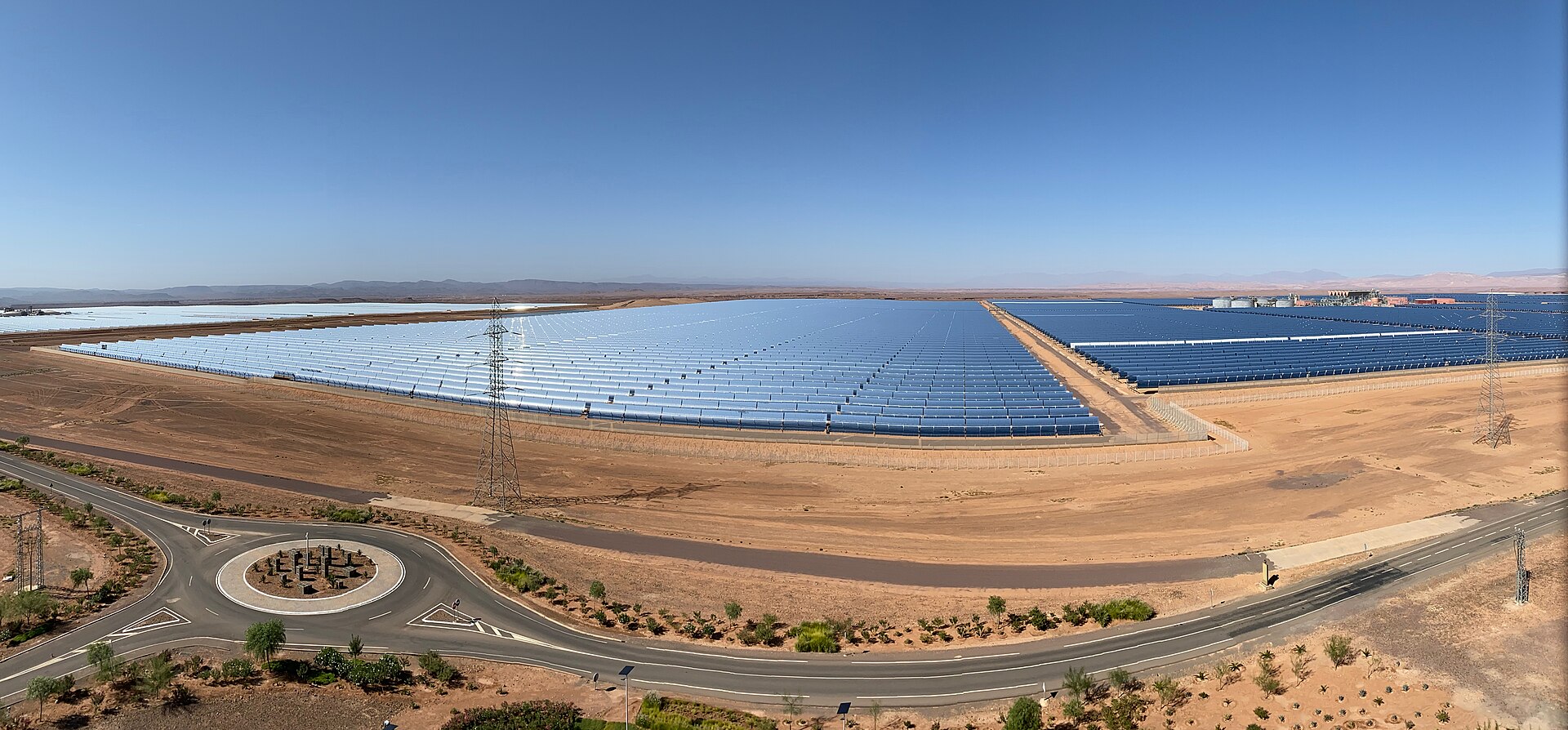
For high-temperature industrial process heat — above 200°C — parabolic trough concentrators are the workhorse technology. A parabolic mirror focuses sunlight onto an absorber tube, heating a working fluid to temperatures that can drive industrial steam systems or even electricity generation.
Parabolic systems are most economic at industrial scale, where the higher upfront capital is paid back through dramatically reduced fuel costs. Operations that currently burn natural gas, diesel, or LPG for process heat are the prime candidates.
The economics in practice
A typical solar thermal installation for industrial hot water in a MENA climate delivers payback in three to seven years, depending on the fuel it replaces. Parabolic systems for high-temperature applications typically pay back in five to ten years. After payback, operating costs are essentially zero for the life of the system — twenty to twenty-five years.
These numbers depend on local fuel prices, solar resource, financing structure, and operational profile. The point is that for the right application, solar thermal is not a sustainability gesture. It's an operating-cost decision.
What to ask before specifying
Before specifying solar PV or solar thermal for an industrial site, an operator should answer:
- What is the energy actually for? Electricity, or heat?
- If heat, at what temperature?
- What's the daily and seasonal demand profile?
- What fuel does it currently replace, and at what cost per kWh?
- Is the site suitable — roof structure, ground area, shading, direct sunlight hours?
The answers usually point clearly to one technology or the other. Mixed sites — where both electricity and heat are needed at industrial scale — sometimes justify both, but as two separate systems, not as a compromise.
How PNM UK works
PNM UK delivers solar thermal and parabolic systems, engineering consultancy, operation & maintenance, spare parts supply, and customised technical solutions for industrial and commercial clients across the United Kingdom and MENA region. We are technology-agnostic on the PV-versus-thermal question — our role is to identify what actually fits the application.
If you're evaluating solar for an industrial site and want a technology assessment that starts from the heat or electricity demand rather than the panel datasheet, start a conversation.
Final thought
Solar PV is brilliant for electrical loads. Solar thermal is brilliant for heat. The mistake is using one to do the other's job — and the cost of that mistake compounds quietly for twenty years. The right starting question is not "how many panels," but "what is the energy actually for."
- solar thermal
- solar PV
- industrial solar
- process heat
- PNM UK
- renewable energy MENA