Most of what is written about Egypt logistics comes from market-research desks: market sizing, growth projections, five-force diagrams. Useful for an investor deck, not much use if you have a container arriving at Alexandria next Tuesday and a supplier asking why the ACID number hasn't been issued yet.
This guide is the other kind. It explains how logistics in Egypt actually works at ground level — which port does what, how clearance really runs since the Nafeza single-window went live, what drives cost, and where a forwarder or 3PL fits. It is written by a group that has been moving cargo in the region since 2003, so where the honest answer is "it depends", we say so rather than inventing a number.
Why Egypt's position matters more than its paperwork suggests
Egypt sits on the one waterway that connects Asian manufacturing to European consumption: roughly a tenth of global seaborne trade transits the Suez Canal in a normal year. That geography does two things for the domestic market.
First, it means Egypt is served by every major container line. Mainline vessels that would bypass a purely domestic market call at Egyptian ports anyway, because the canal brings them past the front door. Importers benefit from schedule frequency that a market of Egypt's size would not otherwise command.
Second, it created the Suez Canal Economic Zone (SCZone) — the industrial and logistics corridor along the canal that has been drawing manufacturing, assembly and bunkering investment for a decade. For importers, the practical effect is that Sokhna and Port Said East are no longer just transit points; they are increasingly places where cargo is worked, stored and value-added before it ever touches Cairo.
The paperwork side of the market has historically lagged the geography. That gap has been closing since 2021, and it changes how you should plan shipments — more on that below.
The port system: which port is good at what
Egypt's ports are not interchangeable, and choosing the wrong one adds days and trucking cost. The working map looks like this.
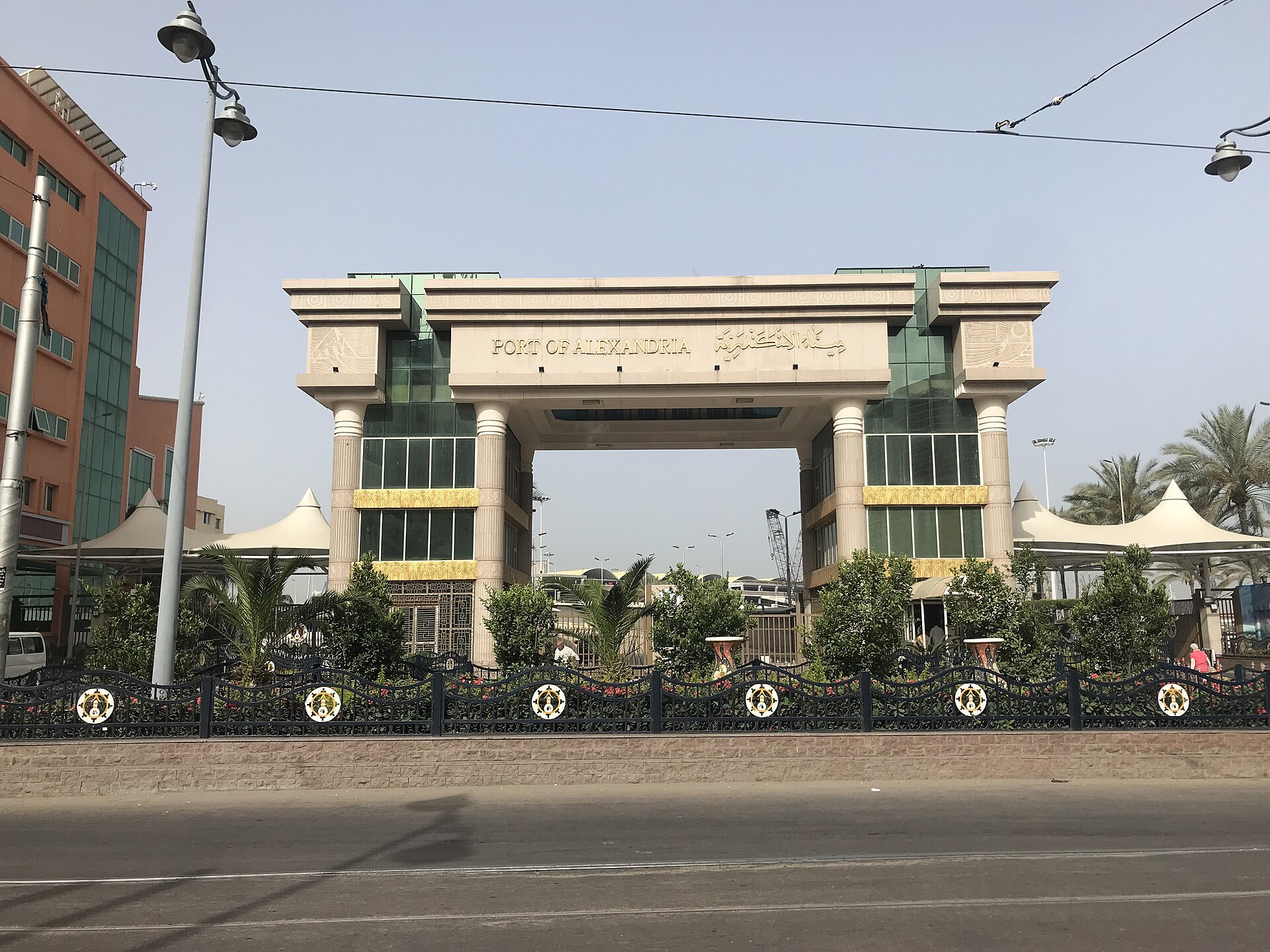
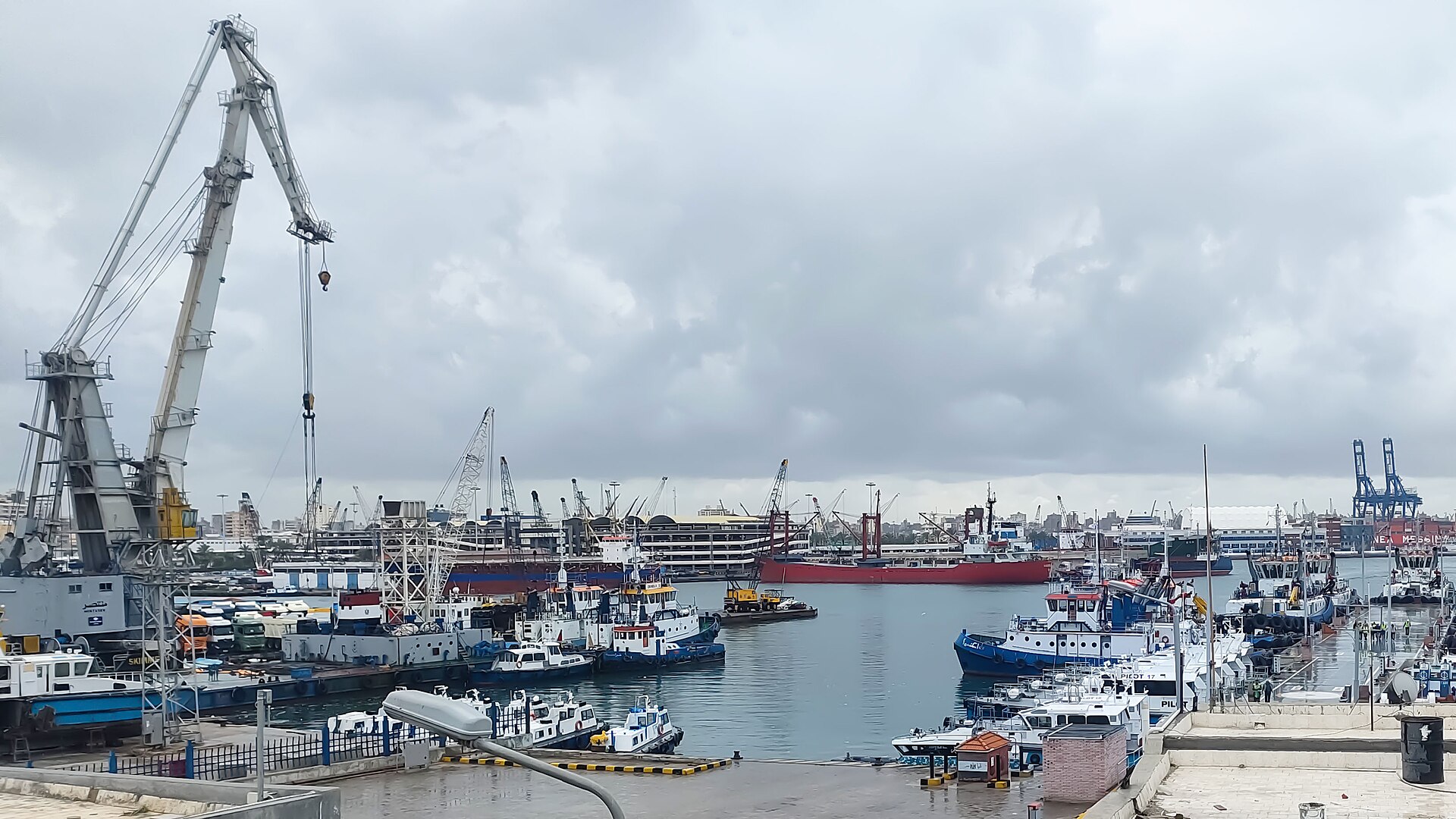
Alexandria and El Dekheila handle the largest share of Egypt's general cargo and a substantial slice of its containers. They sit closest to the Delta's industrial base and to Cairo via the Cairo–Alexandria Desert Road. Alexandria is the default for west-Mediterranean and European traffic and for breakbulk. The trade-off is congestion: it is the busiest gateway, and berth and yard pressure show up in peak seasons.
Damietta is a container and general-cargo port east of Alexandria with a strong position in specific trades — notably furniture-industry inputs (Damietta is Egypt's furniture-manufacturing city) and grain. When Alexandria is congested, Damietta is often the pragmatic alternative for Delta-bound cargo.
Port Said East (East Port Said) sits at the Mediterranean mouth of the canal inside the SCZone. Its container terminal is primarily a transhipment hub on the Asia–Europe trunk routes, which means excellent mainline connectivity. For import cargo destined to the eastern Delta and canal-zone industry, it can be the fastest water-to-gate option.
Sokhna is the Red Sea deep-water port an hour and a half's drive from Cairo, and it is the natural gateway for Asian trade — anything loading in China, Southeast Asia or India that does not need to transit the canal to a Mediterranean berth. Its terminal capacity has expanded steadily under international operators, and its SCZone location has made it the anchor for Chinese manufacturing and logistics investment in Egypt. If your supply base is East Asian and your market is Greater Cairo, Sokhna deserves to be your default assumption, tested against actual carrier schedules.
Adabiya, near Suez, handles general and bulk cargo on the Red Sea side and serves as an overflow and specialist berth rather than a primary container gateway.
For air freight, Cairo International Airport carries the overwhelming majority of Egypt's air cargo, with Borg El Arab (Alexandria) as the secondary option for Delta consignees. Air makes sense in Egypt for the same cargo it makes sense for everywhere — high value-to-weight, urgent replenishment, samples, spare parts — and we cover the sea/air decision in more detail in what a freight forwarder actually does.
How does customs clearance work in Egypt?
This is the part of the market that changed most in the last five years, and the part importers still lose the most time to.
Since 2021, Egypt has required pre-registration of import shipments through Nafeza, the national single-window platform. Before cargo loads at origin, the importer (or their broker) files the shipment data and the system issues an ACID number — the Advance Cargo Information Declaration identifier. That number must appear on the commercial invoice and the bill of lading. Cargo arriving without a valid ACID risks being refused discharge or stuck at the port, at the importer's expense. Exporters shipping to Egypt file their side through the CargoX blockchain document platform that feeds Nafeza.
The document set for a routine import clearance has not changed much: commercial invoice, packing list, bill of lading (or air waybill), certificate of origin, and — depending on the commodity — inspection or conformity certificates. Regulated goods pass through GOEIC (the General Organization for Export and Import Control), which checks conformity for categories such as foodstuffs, appliances and construction materials. Certain consumer goods also require the overseas factory to be registered with GOEIC before its products can be imported at all.
In practice, a clean clearance runs like this: ACID issued before loading; documents transmitted electronically via Nafeza while the vessel is en route; duties and VAT assessed against the customs declaration (Egypt uses the harmonised tariff schedule, and clearance requires the importer's registration and, where applicable, import licence); inspection routed by risk channel; release and gate-out. When that sequence works, containers clear in days. When it breaks — an invoice that doesn't match the packing list, a missing certificate of origin, an ACID filed with the wrong HS code — the container sits, and storage and demurrage meters run.
The honest operator's summary: Nafeza rewarded the prepared and punished the improvised. Importers who front-load their paperwork now clear faster than they did in 2019. Importers who treat documentation as an afterthought pay for it in port storage.
Trucking: the unglamorous half of every shipment
Almost every international shipment into Egypt ends with a truck, and trucking is where tidy plans meet reality. A few things worth knowing:
- Distances are short but variable. Alexandria to Cairo is around 220 km; Sokhna to Cairo roughly 130 km. The kilometres are not the issue — port gate-out times, Cairo access restrictions for heavy vehicles at certain hours, and seasonal congestion are what move delivery times.
- The market is fragmented. Capacity ranges from modern fleets under professional dispatch to single-truck owner-operators. Rates and reliability vary accordingly, which is why serious forwarders maintain vetted carrier pools rather than spot-hiring at the gate.
- Specialised equipment needs booking ahead. Flatbeds for project cargo, reefers, and side-loaders are not same-day resources in peak periods.
A shipment plan that ends at "port of discharge" is half a plan. Door delivery — and who controls it — should be agreed before the cargo loads, which is a large part of why choosing the right freight forwarder in Egypt matters more here than in markets with commoditised trucking.
Where 3PL and freight forwarders fit
Egypt's logistics market has three working layers. Carriers — shipping lines, airlines, trucking fleets — own the assets. Forwarders and customs brokers orchestrate: booking space, preparing and filing documents, clearing customs, arranging delivery. 3PL providers add warehousing, inventory and fulfilment on top for companies that want logistics run as a service rather than a series of transactions.
Most importers of any scale use a forwarder, for a simple reason: the coordination burden in Egypt is genuinely high. A single import touches a carrier, a port operator, Nafeza, customs, possibly GOEIC, a trucker and a warehouse. A capable forwarder is the one throat to choke across all of them. Growing businesses eventually face the same build-or-buy decision we described for SMEs choosing a logistics partner that scales — the Egyptian version just has more government systems in the middle.
What do logistics services in Egypt cost?
Anyone who quotes you a fixed "cost of shipping to Egypt" in an article is guessing. Ocean and air rates reprice weekly; Red Sea security conditions, canal transit patterns and carrier capacity decisions have all moved rates sharply in recent years, in both directions. What we can tell you honestly is what drives the number:
- Freight itself — lane, equipment type (dry, reefer, special), container versus LCL versus airfreight chargeable weight, and the week you book. This is usually the largest and most volatile line.
- Origin and destination charges — terminal handling, documentation fees, and delivery order charges, which are stable and knowable in advance.
- Customs duties and VAT — set by HS code, not by your forwarder; getting classification right up front is the cheapest tariff engineering there is.
- Compliance costs — GOEIC inspection fees, conformity certificates, legalisation where required.
- Time-based charges — storage, demurrage and detention. Entirely avoidable with clean documents and a broker who files early; ruinous when a container sits for three weeks over a paperwork dispute.
- Inland delivery — distance, equipment, and whether the delivery point can actually receive the vehicle.
The practical advice: ignore any provider competing on a published rate table, and compare live quotes on identical scope. A live quote from PNM Egypt itemises these lines rather than folding them into one number, precisely so they can be compared.
Which port should importers use?
A rule of thumb, to be tested against actual sailings for your lane:
- Sourcing from Asia, delivering to Cairo or Upper Egypt: start with Sokhna. Shorter trucking to Cairo than Alexandria and no dependence on Mediterranean berth windows.
- Sourcing from Europe, the Mediterranean or the Americas: Alexandria or El Dekheila, with Damietta as the congestion hedge for Delta-bound cargo.
- Eastern Delta and canal-zone consignees: price Port Said East against Damietta — the trucking leg often decides it.
- Urgent, high-value, or light cargo: air freight through Cairo International, full stop.
The correct answer shifts with carrier schedules and equipment availability, which is why the port decision should be made per shipment, not per policy.
What changed recently — and what it means for importers
Three shifts define the current market. Digitalisation is real: Nafeza and ACID moved Egyptian clearance from a paper shuffle to an electronic pre-arrival process, and the advantage has swung to importers with disciplined documentation. Currency and import-policy conditions have loosened compared with the tightest period of recent years, when letters of credit and import restrictions slowed the market — planning conservatively around banking lead times is still wise. And the SCZone build-out keeps adding port capacity and bonded logistics space, which over time means more routing options, not fewer.
None of this removes the need for local competence. It raises the return on it.
Moving cargo to or from Egypt?
PNM Group has operated in regional logistics since 2003 and is a member of IATA and WCA. Our freight arm, PNM Egypt, runs sea freight and customs clearance with door delivery from its Cairo head office in Heliopolis, with a bilingual team that files Nafeza entries daily. Rates change weekly — descriptions of them don't age well, but a live quote takes a day.
- Egypt logistics
- logistics in Egypt
- logistics services Egypt
- Egypt logistics market
- customs clearance Egypt
- Egyptian ports
- Nafeza ACID